
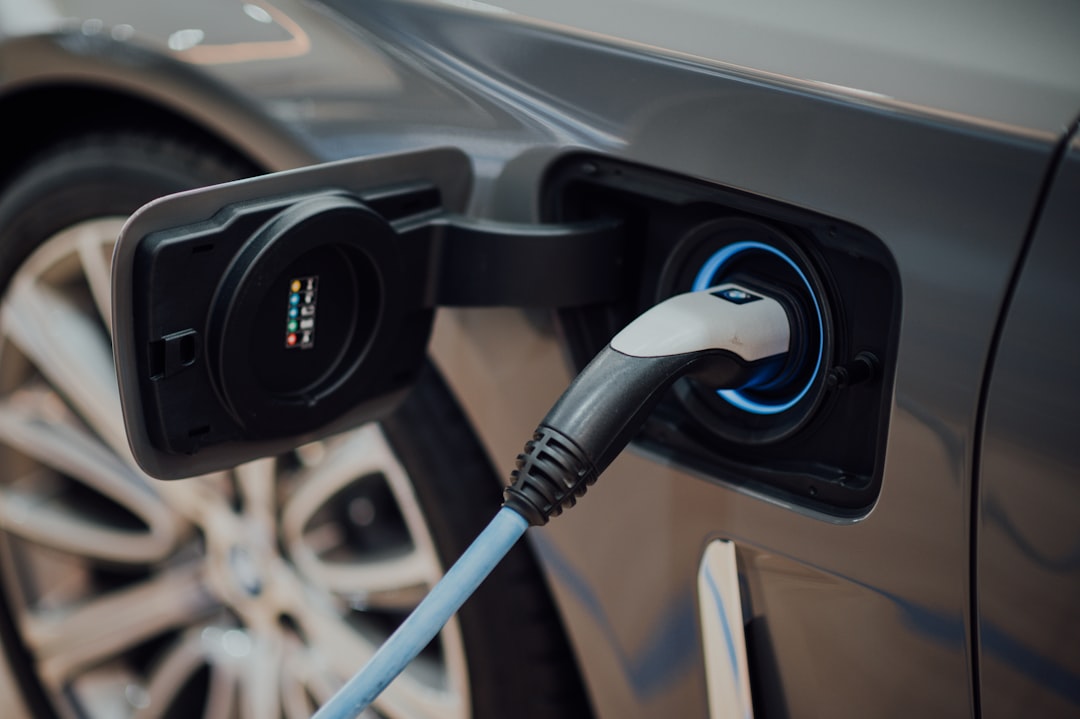
How Much Does It Cost to Charge an Electric Car at Home?
Charging an EV at home typically costs $15-$50 per month depending on your electricity rate and how much you drive. See the full breakdown.
Charging an electric car at home typically costs $15-$50 per month depending on your electricity rate and how much you drive. For the average American driver covering 13,500 miles per year, annual home charging costs range from $200 to $600, which is significantly less than the $1,200-$2,000 most people spend on gasoline annually.
How Home EV Charging Costs Work
The cost to charge an EV at home depends on two main factors: your electricity rate and how much energy your car uses per mile. The basic math is simple: kWh per mile × miles driven × cost per kWh.
Most electric cars use 3 to 4 miles per kWh, or equivalently 0.25 to 0.33 kWh per mile. More efficient EVs like the Tesla Model 3 or Chevy Bolt can get 4+ miles per kWh, while larger, less efficient EVs like pickup trucks might get 2-3 miles per kWh.
The average US electricity rate is about $0.15 per kWh. At that rate, an efficient EV getting 4 miles/kWh costs about 3.75 cents per mile to drive. A less efficient EV getting 2.5 miles/kWh costs about 6 cents per mile.
Compare that to gas: at $3.50 per gallon and 32 MPG, a gas car costs about 11 cents per mile in fuel alone. The EV is 40-70% cheaper per mile just for "fuel."
For the average driver doing 13,500 miles per year: at 0.28 kWh/mile and $0.15/kWh, annual charging cost is about $567, or roughly $47 per month. If you have a cheaper electricity rate — say $0.10/kWh — the annual cost drops to $378, or about $32 per month.
Our EV vs gas cost calculator lets you plug in your specific electricity rate and driving habits to see your exact charging costs.
Level 1 vs Level 2 Charging Costs
There are two main levels of home EV charging, and they have different costs and charging speeds. Understanding the difference helps you decide what is right for you.
Level 1 charging uses a standard 120-volt household outlet. Every EV comes with a Level 1 charger that plugs into a regular wall socket. There is no installation cost — you just plug it in. The downside is speed: Level 1 adds about 3-5 miles of range per hour of charging. For someone who drives 30 miles a day, that means 6-10 hours of charging per day, which works if you charge overnight every night.
Level 2 charging uses a 240-volt circuit (like a clothes dryer outlet) and requires a dedicated charging unit. It adds 15-40 miles of range per hour, so most cars charge fully in 4-8 hours. This is the most popular home charging option for EV owners.
The cost of Level 2 charging includes the charger itself ($300-$800 for a good unit) plus installation ($200-$1,500 depending on your home electrical setup and how far the charger is from your electrical panel). Some homes already have a 240V outlet in the garage, which reduces installation cost.
Importantly, the electricity itself costs the same per kWh whether you use Level 1 or Level 2. You are paying for energy, and the same amount of energy costs the same regardless of how fast it is delivered. The difference is convenience and speed, not the cost per mile driven.
There is also the federal EV charger tax credit of 30% (up to $1,000) for equipment and installation, plus many utility and state rebates that can significantly reduce the upfront cost of a Level 2 charger.
Electricity Rates and Time-of-Use Plans
Your electricity rate is the biggest variable in home charging costs. Rates vary dramatically by state and utility company, from under $0.10/kWh in some parts of the country to $0.30/kWh or more in others.
Many utilities offer special EV rate plans or time-of-use (TOU) rates that make charging cheaper if you charge during off-peak hours (usually late night and early morning). These plans can save you a lot of money.
With a TOU plan, electricity costs more during peak hours (typically afternoon and early evening when demand is high) and less during off-peak hours (overnight when demand is low). If you can set your EV to charge during off-peak hours — which most EVs and chargers can do automatically — you can save 20-50% on your charging costs.
For example, if your standard rate is $0.18/kWh but off-peak is $0.09/kWh, and you charge overnight, your effective charging cost is cut in half. On 13,500 miles per year at 0.28 kWh/mile, that is the difference between $680 per year and $340 per year.
Some utilities also offer special EV rates that include a certain amount of charging for a flat monthly fee, or that provide rebates for installing a smart charger that helps balance the grid.
It is worth checking with your utility company to see what EV-specific plans or rebates they offer. Many have incentives that make home charging even more affordable.
You can model different electricity rates and see the impact on annual costs with our EV vs gas calculator.
Home Charger Installation Costs
If you decide to install a Level 2 home charger, the total cost depends on several factors. Here is what to expect.
The charger unit itself: basic Level 2 chargers start around $300-$400. Smart chargers with Wi-Fi, app connectivity, and advanced features cost $500-$800 or more. Some premium or high-amperage chargers can cost over $1,000.
Installation cost varies the most. If you already have a 240V outlet in your garage near where you park, you might just need a simple adapter or minimal wiring — maybe $200-$400. If you need a new circuit run from your electrical panel, especially if the panel is far from the parking spot or if you need a panel upgrade, costs can be $800-$1,500 or more.
Factors that increase installation cost: distance from electrical panel (more wire = more money), needing a permit, concrete or asphalt to cut through, panel upgrade needed, difficult access, or needing a higher-amperage circuit.
On the plus side, there are often incentives that help offset these costs. The federal Residential Clean Energy Credit covers 30% of EV charger costs (up to $1,000). Many state governments and local utilities also offer rebates of $200-$1,000 or more for home charger installation.
You also do not necessarily need a fancy smart charger. A basic Level 2 charger does the same thing — it just might not have all the app features and scheduling capabilities. Many EVs have built-in charging scheduling anyway, so you can still take advantage of off-peak rates without a smart charger.
Public Charging vs Home Charging Costs
While most EV drivers do 80-90% of their charging at home, it is still useful to understand how public charging costs compare.
Public Level 2 chargers typically cost $0.20-$0.40 per kWh, or sometimes a flat hourly rate ($1-$3 per hour). At $0.30/kWh, charging from 20-80% takes about 60 kWh for a long-range EV and costs about $18. That adds roughly 6-7 cents per mile, which is still cheaper than gas but more expensive than home charging.
DC fast charging is significantly more expensive, usually $0.30-$0.60+ per kWh. At $0.45/kWh, adding 100 miles of range costs about $12-$15, which is roughly equivalent to gas cost per mile for a similar car. Fast charging is great for road trips but not ideal for daily charging if you have a home option.
Some public charging networks offer membership plans that reduce the per-kWh rate for a monthly fee. If you use public charging often, these can be worth it.
The general rule: home charging is the cheapest way to "fuel" an EV. Public Level 2 is a bit more expensive but still cheaper than gas in most places. DC fast charging is the most expensive EV charging option, comparable to or slightly cheaper than gas depending on prices in your area.
If you rely heavily on public charging because you cannot charge at home, make sure to factor those higher costs into your total ownership budget. The EV savings are not as dramatic if you never charge at home.
Our total cost of ownership calculator factors in charging costs and other expenses to give you the complete picture.
Tips to Reduce Charging Costs
There are several ways to keep your home charging costs as low as possible. Here are some of the most effective strategies.
First, take advantage of off-peak electricity rates. If your utility offers time-of-use pricing, schedule your car to charge during the cheapest hours (usually midnight to 6 AM). Most EVs and chargers let you set charging schedules, so you can plug in when you get home and have it automatically start charging when rates drop.
Second, check with your utility for EV-specific plans and rebates. Many utilities have special EV rates that are cheaper than standard residential rates, or they offer rebates for home charger installation or smart charging participation.
Third, shop around for electricity providers if you live in a deregulated market. Different suppliers offer different rates, and switching might save you money on all your electricity use, not just EV charging.
Fourth, maximize your solar panels if you have them. Charging your EV with solar power is essentially free after the panel payback period, and it maximizes your environmental benefit too. If you do not have solar, you might be able to choose a 100% renewable energy plan from your utility for a small premium.
Fifth, use free public charging when convenient. Many workplaces, shopping centers, and other locations offer free Level 2 charging. Taking advantage of these when you can reduces your home charging costs even more.
Finally, drive efficiently. Just like with gas cars, your driving style affects efficiency. Smooth acceleration, moderate speeds, and using regenerative braking all help you get more miles per kWh, which means fewer dollars spent on charging.
Frequently Asked Questions
QHow much does it cost to charge an EV at home per month?
Most drivers pay $15-$50 per month for home EV charging, depending on electricity rates and how much they drive. The average US driver (13,500 miles/year) pays about $30-$50/month at average electricity rates of $0.13-$0.17/kWh.
QIs Level 2 charging worth the cost?
For most EV owners, yes, especially if you drive more than 20-30 miles per day or have a larger battery. Level 2 charging is much faster and more convenient. With incentives like the 30% federal tax credit and utility rebates, the upfront cost is often lower than you think.
QHow much does a home EV charger cost to install?
The charger itself is $300-$800, and installation ranges from $200-$1,500+ depending on your home electrical setup. Average total cost is about $500-$1,200. The 30% federal tax credit and utility rebates can significantly reduce this.
QIs it cheaper to charge at night?
If your utility has time-of-use rates, yes — off-peak hours (usually overnight) are significantly cheaper, sometimes 30-50% less. Most EVs can be scheduled to charge automatically during off-peak hours, maximizing your savings.
QHow much does it cost to charge an EV from 0 to 100%?
Battery size × electricity rate. A 60 kWh battery at $0.15/kWh costs about $9 for a full charge. A 100 kWh battery at the same rate costs about $15. This gives roughly 220-350 miles of range depending on the vehicle efficiency.
QHow does EV charging cost compare to gas?
Home EV charging is significantly cheaper than gas. At average US rates, driving on electricity costs about 3-6 cents per mile vs 10-14 cents per mile for gas at $3.50/gallon and 25-35 MPG. Annual fuel savings are typically $500-$1,500.
Ready to Calculate?
Want to see how much you would save by switching to an EV? Use our free EV vs Gas Cost Calculator to compare charging costs, fuel costs, and total ownership expenses for your specific situation.
Calculate EV Charging CostsRelated Calculators
EV vs Gas Cost Calculator
Compare the 5-year total cost of ownership between electric and gas vehicles, including fuel, charging, maintenance, depreciation, and incentives.
EV Tax Credit Calculator
Estimate your total EV savings from federal tax credits, state rebates, utility discounts, and other incentives based on your location and income.
Total Cost of Car Ownership Calculator
Calculate the complete 5-year cost of owning a vehicle including depreciation, fuel, insurance, maintenance, repairs, fees, and financing interest.
Educational estimate only. Not financial advice. Consult a qualified professional for specific guidance.